

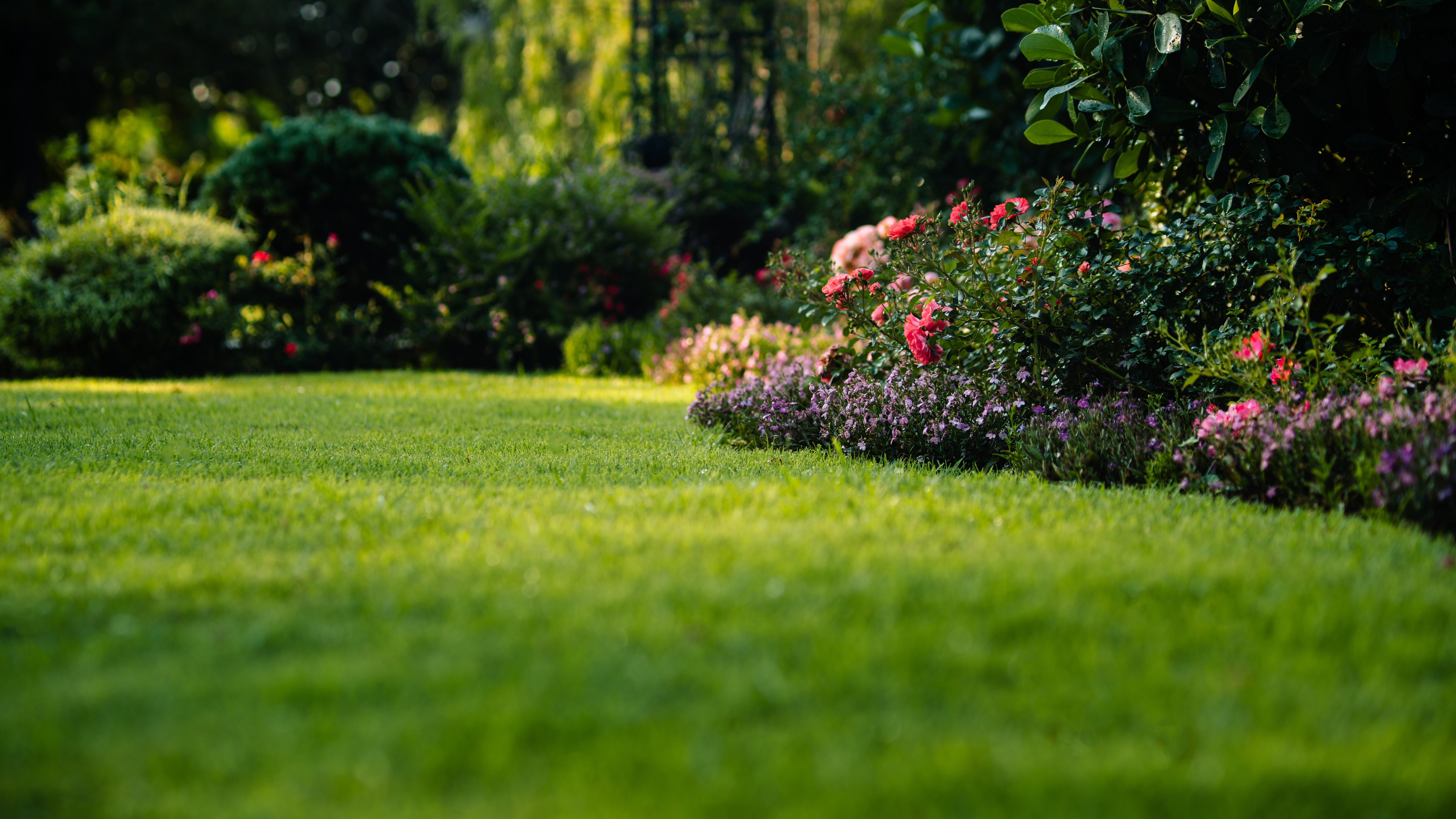
Summer in Ontario brings beautiful long days and the perfect opportunity to help your outdoor spaces flourish. With the right care strategies through the peak heat of mid-summer, your lawn and garden can stay lush and vibrant right through to fall. And as August wears on, that same care starts doing double duty: keeping your property looking its best right now, while setting the stage for a strong fall.
Southern Ontario’s climate is uniquely demanding: hot, humid summers with temperatures regularly climbing above 30C, the occasional week-long heat dome, and rainfall that can swing between soaking downpours and extended dry spells. The good news is that with a few smart seasonal adjustments, your lawn and plants are built to handle it beautifully.
Smart Watering for Summer Success
Effective watering makes all the difference during hot weather. The key is timing and depth.
Best time to water: Early morning, between 4am and 9am, ideally before 7am. This timing allows water to penetrate deeply before the day heats up, and the grass blades have time to dry, which helps prevent disease and fungal issues, something Southern Ontario’s humidity makes especially worth watching.
How much: Your lawn needs about 2.5 to 4cm of water per week, including rainfall. Deep, infrequent watering encourages strong root growth that helps grass access moisture during dry spells, far more effective than a light daily sprinkle.
Watch for these signs your lawn needs water:
- Footprints remain visible after walking across the grass
- Grass blades fold or curl inward
- Colour shifts from vibrant green to blue-grey
- Soil feels dry 8–10cm below the surface
Mowing: Height and Frequency Matter More Than You Think
One simple adjustment makes a big difference: raise your mower blade to 8–10cm during summer. Taller grass creates natural shade for the soil, reduces moisture loss, and produces more energy through photosynthesis. This alone can reduce water needs by up to 30%, a meaningful saving during a dry August stretch.
Follow the one-third rule: never remove more than a third of the blade length at once, taking off too much weakens the plant. Because cool-season grasses like Kentucky bluegrass and tall fescue (the most common types across Southern Ontario) naturally slow down in peak heat, mowing every 7–10 days is typically enough, versus every 5–7 in spring.
About grass clippings: Leave them on the lawn to return nitrogen and retain moisture, just rake off any thick clumps. And keep your mower blade sharp: a clean cut resists disease and holds moisture far better than a dull blade, which tears and stresses the plant.
Garden Care: Keeping Plants Vibrant Through the Heat
Your garden plants thrive with a couple of summer-specific practices:
Mulching: Apply a 5–8cm layer of organic mulch (shredded bark or wood chips work well) around plants to keep soil cool, retain moisture, and suppress weeds. Keep mulch a few centimetres away from stems to avoid rot.
Signs your plants need attention:
- Leaves wilt in the morning (afternoon wilting during a 33°C day can be normal check again in the evening)
- Leaf edges turn brown or crispy
- New growth appears stunted or pale
Most garden plants benefit from the same deep-watering approach as your lawn. During extended heat waves, and Southern Ontario gets a few every summer, a temporary layer of shade cloth over more sensitive plants can make a real difference.
Recognizing and Responding to Heat Stress
Catching stress early means a quick recovery. Here’s what to look for:
Early signs (easy to address):
- Grass loses its spring-back when walked on
- Slight colour shift toward grey or blue
- Leaf blades fold lengthwise
Solution: Water deeply and raise your mowing height if you haven’t already.
Moderate stress signs:
- Brown patches appearing in full-sun areas
- Blades feel brittle underfoot
- Weeds moving into stressed, thinning spots
Solution: Deep watering becomes essential. Ease up on foot traffic and hold off on fertilizing until temperatures moderate.
When Late Summer Stress Runs Deeper
By late August, some lawns are dealing with more than short-term heat stress. A full season of foot traffic, mowing, and heavy rain can leave soil compacted, making it harder for water and nutrients to reach the roots, even when your watering routine is right on track. Watch for:
- Browning that doesn’t green up within a day or two of watering
- Water pooling on the surface instead of soaking in
- Thinning patches that keep spreading despite consistent care
These are signs a lawn needs more than a watering adjustment, it’s telling you it’s ready for aeration. Late summer is actually the ideal window to start planning for it. Aeration relieves compaction and gives grass the best possible chance to recover and thicken up before winter, and pairing it with overseeding in early fall helps fill in any thin or bare spots left behind by a demanding summer.
A Few Extra Summer Tips
Fertilizing: Reduce or skip fertilizer during the hottest weeks. If needed, use a slow-release formula at half-strength, and only when you can guarantee consistent watering afterward.
Foot traffic: Stressed grass recovers more slowly from compaction. In high-traffic areas, consider laying stepping stones or creating a defined path.
Weeds: Hand-pull when possible. The best prevention is a thick, healthy lawn that doesn’t give weeds room to establish.
Fall Prep Starts Sooner Than You Think
It may not feel like it during a 30C afternoon, but the choices made in late summer set the stage for how a lawn and garden come through fall and into winter. Scheduling aeration, overseeding, and a fall clean-up early means securing a spot before schedules fill, and giving your property the runway it needs to recover before the growing season ends.
It's also one of the most cost-effective ways to protect the investment you've made in your property, a lawn and garden that come through summer strong need far less remedial work than one left to recover on its own.
Let the Professionals Handle the Hard Part
Summer is the most demanding season for lawns, and consistent professional lawn care makes a visible difference. Regular monitoring means heat stress gets caught early, watering and mowing are timed precisely for your turf, and nothing falls behind during a busy long weekend or family vacation.
The results speak for themselves: properties maintained by the Willow Landscape team stay green and lush through August, while inconsistent care leads to brown patches and thinning, and the recovery costs that come with them. Whether you're a homeowner or managing a commercial property, our maintenance plans keep it looking its best all season.
This is the season where professional maintenance pays for itself.
Ready to stop guessing and start enjoying your yard?
Contact Willow Landscape. We'll handle the hard part all summer long, and help you get ahead of fall with aeration and overseeding before spots fill up.